Are you in a flood zone? If so, here’s what you can do
Few people know if their property is at risk for flooding, however, every section of land is rated for flooding by years; 0 to 100. For example, if your lot floods every fifty years, it’s a safe bet it won’t flood in your lifetime. The higher the number of years, the greater the grade elevation
Before you purchase land, request the flood plain
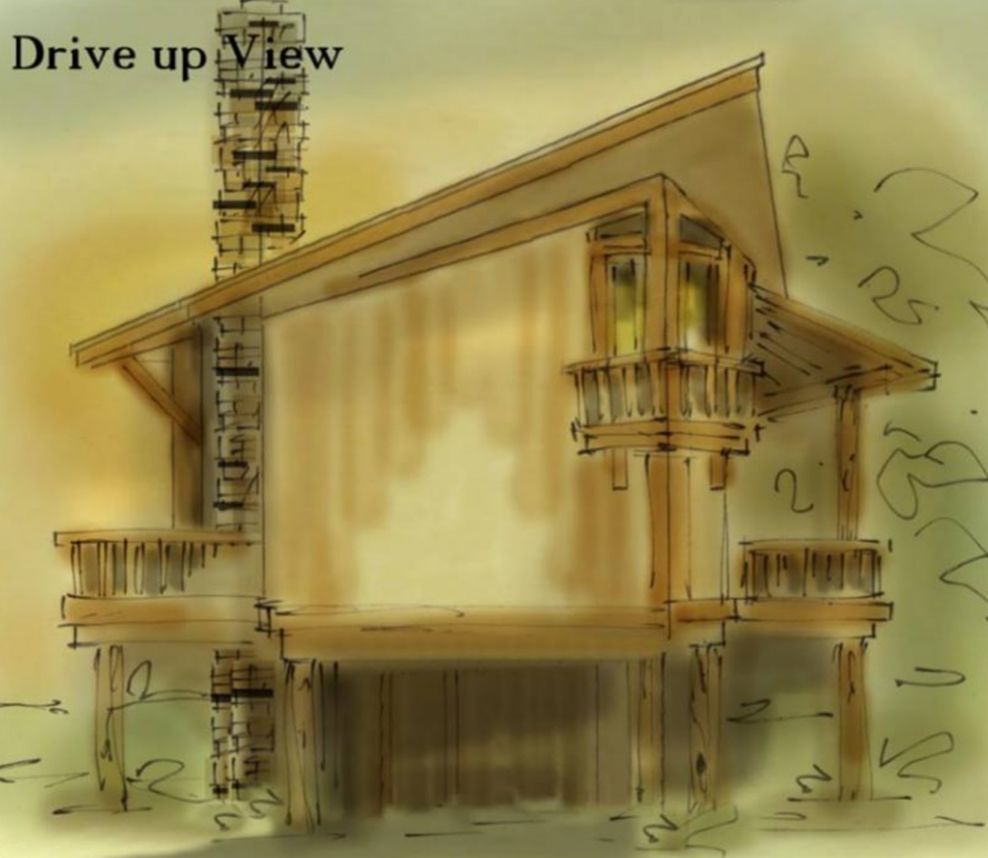
If you’re land has a substantial number of acres, obtain a topographical map. This is a plat, showing the grade elevations. Grade elevations indicate how low the grade falls, or high it rises. The grade elevations are shown on the plat as lines. If you study the topo, you’ll be able to determine the lowest portions of the property. It’s best to build on higher ground, however, some lots, such as lake front, or ocean front properties, are in a flood zone naturally. Typically, homes on these kinds of lots are built up on poles, or stilts as shown in the image top of page. It’s not uncommon
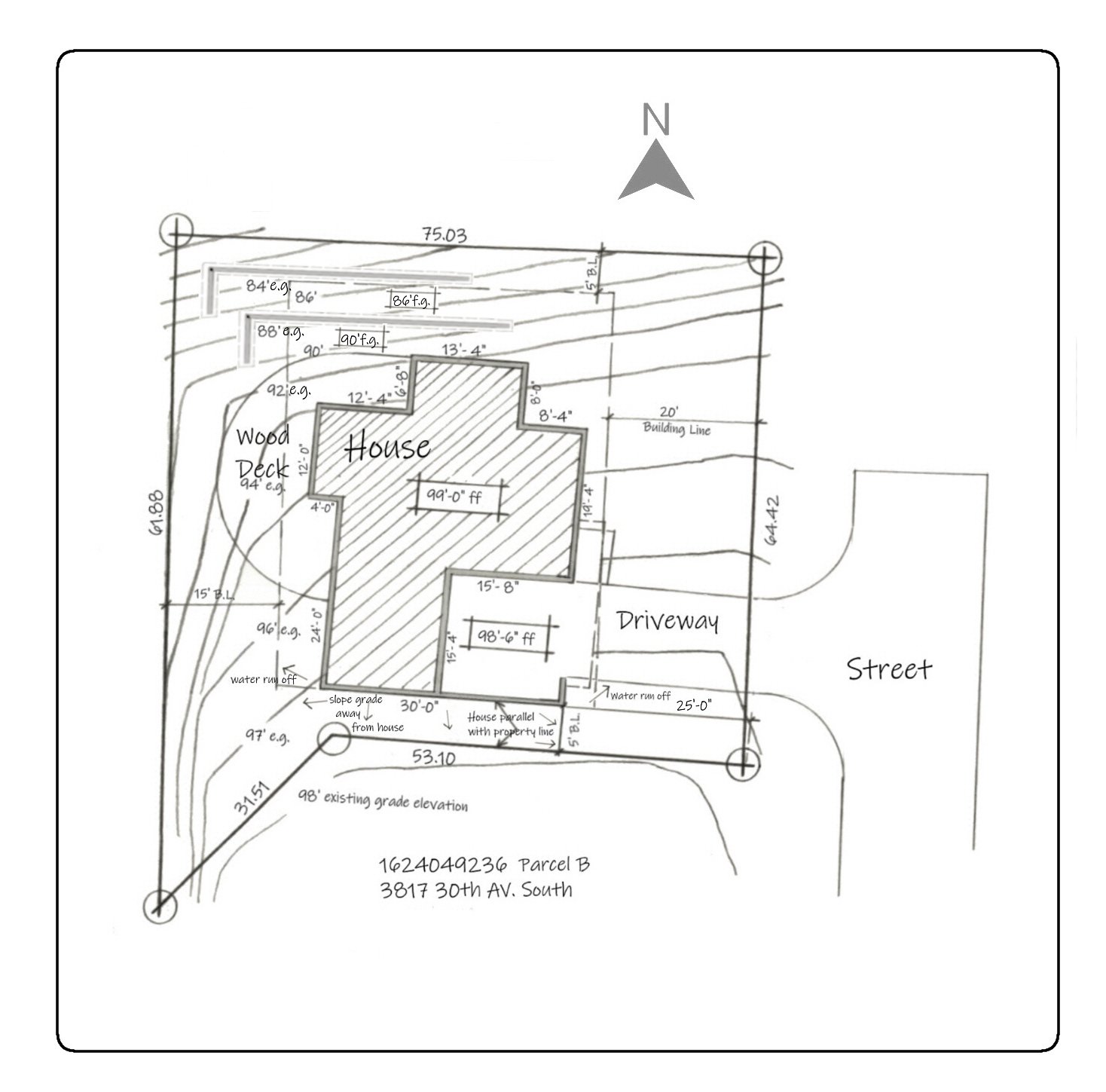
High water houses are not uncommon in regions that have low sea levels. The grade elevations in the plot plan shown below has a very low grade elevation, because it’s located in a sea coast city. Grade elevations start at zero, which is referred to as sea level. Natural bodies of water always sit at the lowest levels, so this is our starting point. In mountainous regions, grade elevations can reach thousands of feet. The highest grade elevation in the world is on the border of Nepal and China, reaching an amazing altitude of 29,031.7 feet
The image below shows a plot plan, a plan required by the city that shows how the new home will sit on the lot. This assures the city the home will not encroach the property (dotted) lines. Property, or building lines are put in place to keep homes from being built too close to each other in case of fire, however, these same codes assure everyone a little privacy. The grade elevations are noted, and typically boxed. They refer to the free form horizontal lines that represent the fall or rise of the grade. The home also has an elevation. It’s referred to as finish floor level, whereas the natural grade is referred to as existing grade. Grade that’s manipulated or disturbed is referred to as finish grade
Depending on your location, you may want to get flood insurance. Regular home owner’s insurance doesn’t cover flooding, so check with your agent. If you’re in a 50 year flood zone or lower, you should get the insurance. In fact, most of us should have it, because Mother Nature is full of surprises
Need a plot plan to complete your set of drawings to submit for permit? Plot Plan
Consider a Custom home design
All rights reserved
Author: Brenda Rand